CardioTag
Problem
Cardiovascular disease (CVD) remains the leading cause of death worldwide, yet clinicians’ ability to noninvasively assess what is happening inside the heart has remained remarkably limited. Traditional noninvasive cardiac monitoring has focused primarily on ECG and rhythm analysis, offering an incomplete picture of cardiac function.
This gap is particularly consequential in heart failure (HF). Heart failure affects nearly 6.7 million adults in the US, driving over $30 billion in annual healthcare costs. Tracking the most clinically useful signals in HF management – such as cardiac filling pressures, timing intervals, and volume status - typically requires invasive catheters or surgically implanted sensors that are costly, carry procedural risk, and reach only a fraction of the patients that could benefit.
Solution
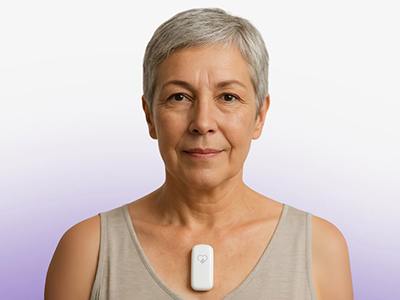
CardioSense developed CardioTag™ to address this critical gap in cardiovascular monitoring by combining multiple sensing modalities into a single wearable device. The platform simultaneously captures seismocardiogram (SCG), electrocardiogram (ECG), and photoplethysmogram (PPG) signals, providing comprehensive, noninvasive insight into cardiac mechanics, electrical activity, and blood flow.
When paired with CardioSense’s proprietary machine learning algorithms (currently under regulatory review), the system has demonstrated the ability to noninvasively estimate cardiac filling pressures and other hemodynamic parameters. Clinical studies have shown performance comparable to implantable hemodynamic sensors.
By integrating advanced sensing technology with AI-driven analytics, CardioSense aims to provide clinicians with actionable cardiovascular insights while reducing the need for invasive monitoring procedures.
Using advanced AI, we’ve unlocked previously hidden physiological signals to non-invasively measure pulmonary capillary wedge pressure with a simple wearable patch, replacing procedures once only possible through invasive methods.”
Assistant Professor, Feinberg School of Medicine
Benefits
- FDA Clearance: As a Class II medical device – first wearable to simultaneously capture ECG, PPG, and SCG signals.
- Noninvasive and Versatile: Designed for use across a range of care settings.
- AI-Enabled Hemodynamic Insights: ML algorithms noninvasively estimate cardiac filling pressures, an early, pre-symptomatic marker of worsening heart failure, with accuracy on par with implantable sensors.
Technology & Commercialization Status
CardioTag™ is built on multimodal sensing and machine learning technology developed by Feinberg's Mozziyar Etemadi, MD, PhD, whose research in wearable medical devices and physiologic signal processing laid the foundation for Cardiosense's noninvasive cardiac monitoring platform.
Cardiosense, a Chicago-based medical AI company, was co-founded by Dr. Etemadi and Amit Gupta, who conceived the company while earning his MBA at Northwestern's Kellogg School of Management. Early development was supported by Northwestern's NUvention course and Kellogg's Zell Fellows program. Since then, the company has raised more than $30 million from leading venture capital firms and health system investors. In July 2025, the FDA granted 510(k) clearance for CardioTag.
The company is now advancing its cardiac pressure algorithm, which received FDA Breakthrough Device designation in 2022 and is intended to pair with CardioTag to provide comprehensive heart failure management.
Cardiosense plans to initially deploy the platform across inpatient and outpatient hospital settings before expanding to remote, hemodynamic-guided heart failure management in the home.
Northwestern Inventor
Mozziyar Etemadi, MD, PhD
Assistant Professor, Anesthesiology
Feinberg School of Medicine