Northwestern UniversityOffice for Research

Northwestern University - Office for Research

Universities Pool Resources, Spotlight Research

"The heart of a thriving company-formation effort begins with university research," said James Tyree, president of Abbott Biotech Ventures and keynote speaker at the Chicago Innovation Spotlight on May 18, 2011. "That's why it's great to see universities working together through programs like these."

Held at Northwestern University, the event gathered researchers — and their respective technology transfer offices — from Northwestern, University of Chicago and University of Illinois Chicago to showcase their best biomedical research. Together, these universities represent $1.5 billion in sponsored research annually.

Technology Transfer Event at Northwestern University
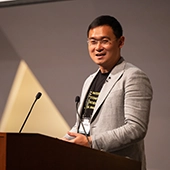
Chicago area scientists, inventors and technology transfer staff gather for inaugural Chicago Innovation Spotlight program. James Tyree, President of Abbott Biotech Ventures, gives the keynote address. Photo by Lloyd DeGrane

During the half-day meeting, scientists, inventors and technology transfer staff made fast pitches to scores of potential investors and companies about emerging licensing opportunities and recent startups.

"This collaboration didn't just happen because someone threw a switch," said Barbara Goodman, senior vice president at Propel. "It's been growing for years, step by step, as universities have come to realize that one plus one plus one doesn't equal three but rather five, or more."

Tyree emphasized that this is a good time for universities to promote their research because "big pharma is relying more than ever on external sources for innovations."

Startup pitches

Fifteen nascent companies made pitches, including five from Northwestern:

• Ohmx: developing a low cost, user-friendly, handheld analyzer that quantifies analytes from a single drop of blood.

• Rhythmos Therapeutics: advancing first-in-class therapeutics for the treatment and prevention of cardiac arrhythmias.

• Ubi Diagnostics: building a novel phone application for tracking movement related to medication side effects or disease symptoms.

• Aurasense: developing unique biofunctionalized nanparticles, whose unique architecture gives them versatility as therapeutics and drug delivery agents for a broad array of diseases.

• InnovaGem: working on a novel drug delivery process to improve the efficacy of therapeutics and quality of life for patients.

Licensing pitches

Fifteen licensing opportunities were also presented, including five from Northwestern:

• a treatment and potential vaccine for urinary tract infection;

• a non-invasive eye imaging device;

• a cardioprotective biologic drug;

• a metastatic cancer diagnostic and related therapeutics;

• compounds to inhibit and treat prostate cancer metastasis.

Last year Northwestern ran this event on its own. This year it opened the event to other universities, hoping to attract more interest from venture capitalists and companies. "It worked," said Jim Bray, assistant director of the Northwestern University Clinical and Translational Science Institute (NUCATS) Center for Translational Innovation. "Some potential investors flew in from the coasts."

Nancy Sullivan, director of UIC's Office of Technology Management, agrees that the event was a success. "We have follow-up meetings planned with a couple of companies/investors who are interested in UIC technologies they saw. Another company that we invited to the event is potentially interested in sponsoring some of our research.

"It shows that working together helps grow the pool of regional investment and partnering opportunities rather than cannibalizing each others ideas and work," she added.

"Next year, this event will be bigger and better," Bray concluded.