Northwestern UniversityOffice for Research

Northwestern University - Office for Research

Inside Look: The Past, Present & Future of INVO

Alicia Loffler, the executive director of the Innovation and New Ventures Office at Northwestern (INVO), discusses recent changes at INVO, unique opportunities for collaboration at the university and a few Northwestern startups she’s excited about.

What does INVO do and why is it important?

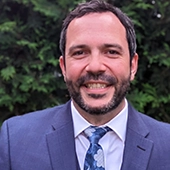
Alicia Loffler, Executive Director, INVOThe Innovation and New Ventures Office helps move Northwestern technologies to the marketplace to have real-world impact. We work with faculty and students to create startups and partnerships with corporations. By fostering innovation within Northwestern, INVO strives to improve quality of life and fuel economic development.

There are three main reasons that this is important. First, the commercialization of research has been mandated by the Federal government through the Bayh-Dole Act. Second, it is an opportunity to repay society for the substantial research funding Northwestern receives. Third, in many instances, it is the ultimate realization of our faculty’s life work that will have a real-world impact.

INVO has recently undergone a restructuring. Why was a change needed?

The invention of Lyrica opened up extraordinary opportunities for us. One result was that it enabled the hiring of faculty who are especially entrepreneurial. We have also benefited from the first IPO of a company based on a Northwestern technology, Nanosphere. We are in the fortunate position very few universities find themselves -- a perfect inflection point to really define ourselves as a research university.

We recognize that these events are serendipitous. If we want to maximize more of these, we need to build an infrastructure that truly nurtures innovation. We moved the technology transfer process at Northwestern from being a transactional office to being a much more proactive office with an emphasis on business development, working more closely with students and faculty to develop strong partnerships.

What are some of the specific changes that have been made?

First, we looked at ways to better leverage and coordinate some of Northwestern’s resources that have vibrant entrepreneurial activities, such as NUCATS, McCormick School of Engineering, Kellogg and the Chemistry of Life Processes Institute. We have taken steps to determine how we can better align their existing efforts.

One new initiative has focused on faculty mentorship and know-how. We formed an alliance with two other research universities within the region - University of Chicago and University of Illinois, Chicago – to create a mentorship program (Chicago Innovation Mentors) that help our faculty when they are considering starting a company. We match faculty with seasoned entrepreneurs that have started many successful companies.

All these outreach activities and expansion will not work unless INVO has a strong commitment to internal processes and systems. The INVO Office recently implemented a new knowledge management system to integrate our data – invention disclosures, patents and licenses. At the same time, we are reviewing all aspects of the office work flow and establishing process improvement goals.


What companies are you most excited about right now?

There are a number of companies that stand out.

Narrative Science, based on a technology of automated narrative story generation from data, is a collaboration between McCormick School of Engineering and Medill School of Journalism. I think most of the innovations at Northwestern will come from these kinds of creative collaborations, and this is our first one. This is what makes Northwestern unique and different from say, MIT - we have strong theater, journalism, and humanities programs that generate a lot of creative research. It is making the right connections – in this case, between engineering and journalism - but it could be with theater or other areas of excellence beyond science that will make us distinctive. Narrative Science was also successful in raising funds from a prestigious Silicon Valley venture firm - the first time we’ve had a Silicon Valley firm invest in a Northwestern company.

Polyera is another company that shows great promise with superb technology and management in a fast growing market. Polyera emerged from the research of Chemistry Professor Tobin Marks, developing and commercializing organic semiconductors and dielectrics for organic thin-film transistors and organic photovoltaics. This technology is used for flexible display backplanes, printed RFID tags and printed solar panels. Recently, Polyera won an award for technologically outstanding and original product development, and new significant commercial potential. This recognition is just the beginning for Polyera’s success.

Aurasense is a company founded by Chad Mirkin from Weinberg College and Shad Thaxton from the Feinberg School of Medicine. The company has in its pipeline a product that will revolutionize the way we treat high cholesterol, the main cause of heart disease. Aurasense creates a synthetic high-density lipoprotein (HDL) that is able to sweep the cholesterol from the bloodstream before it can deposit and form plaques.

Finally, one of the startups I am most excited about is a non-profit, The Northwestern Global Health Foundation (NGHF). This non-profit is a recent spinout from two schools, McCormick School of Engineering and Kellogg School of Management, and has a unique business model that reflects creative methods to bring innovations to the people that need it the most. NGHF operates at an arms-length from Northwestern and is devoted to the creation of products for the developing world. NGHF recently entered into an agreement with Quidel to assist in the development of their current lead product, a pediatric HIV diagnostic that is poised to save the lives of millions of children in Africa. Our first customer, the CHAI (Clinton Health Access Initiative), has purchased thousands of units for testing in four African countries.

Where do you want INVO to be 5 years from now?

We want to be out of business! Our goal is to have substantial entrepreneurial activity by both students and faculty that will create a strong ecosystem so that INVO will no longer be needed. If we have successful entrepreneurs, others will be able to learn from them and that is the most powerful way to build a community. Five years from now we will have produced a vibrant self-sustained community that will generate multiple innovations to benefit society.

Northwestern University